Ditapis dengan
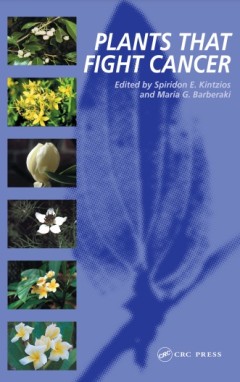
PLANTS THAT FIGHT CANCER
Everybody thinks it cannot happen to them. And yet, six million people die of cancer every year. Approximately every fourth citizen of a developed country will be stricken sometime during his life and approximately 400 new incidents emerge per 100,000 people annually. Once considered a mysterious disease, cancer has been eventually revealed to investigators (Trichopoulos and Hunter, 1996). Dise…
- Edisi
- 0
- ISBN/ISSN
- 0-415-29853-9
- Deskripsi Fisik
- 314 hlm
- Judul Seri
- 0
- No. Panggil
- 616.99/Spi-p
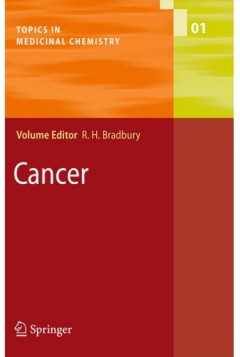
1 Topics in Medicinal Chemistry : Cancer
After over half a century of chemotherapy research, cancer remains one of the most difficult life-threatening diseases to treat, a consequence of factors which include limitations of animal models, tumour diversity, drug resistance and side effects of therapy. This introductory overview gives a brief perspective on the discovery of historical cytotoxic and anti-hormonal drugs, and then highligh…
- Edisi
- 0
- ISBN/ISSN
- 978-3-540-33119-3
- Deskripsi Fisik
- 458 hlm
- Judul Seri
- 0
- No. Panggil
- 615.1/Bra-t
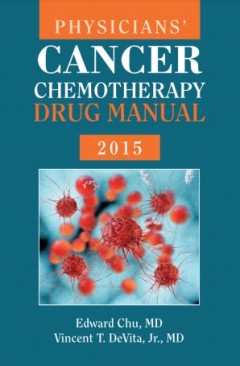
Physicians’ Cancer Chemotherapy Drug Manual 2015
The development of chemotherapy in the 1950’s and 1960’s resulted in curative therapeutic strategies for patients with hematologic malignancies and several types of advanced solid tumors. These advances confirmed the principle that chemotherapy could indeed cure cancer and provided the rationale for integrating chemotherapy into combined-modality programs with surgery and radiation therapy …
- Edisi
- 0
- ISBN/ISSN
- 978-1-284-07521-2
- Deskripsi Fisik
- 683 hlm
- Judul Seri
- 0
- No. Panggil
- 610/Edw-p
 Karya Umum
  Filsafat
  Agama
Agama  Ilmu-ilmu Sosial
  Bahasa
  Ilmu-ilmu Murni
  Ilmu-ilmu Terapan
  Kesenian, Hiburan, dan Olahraga
  Kesusastraan
  Geografi dan Sejarah